

The Lonely Revolution
Why is everyone building a solo experience?

We are opening up (domain ) to alpha testing. If you want early access and have not joined the list yet. Sign up here.
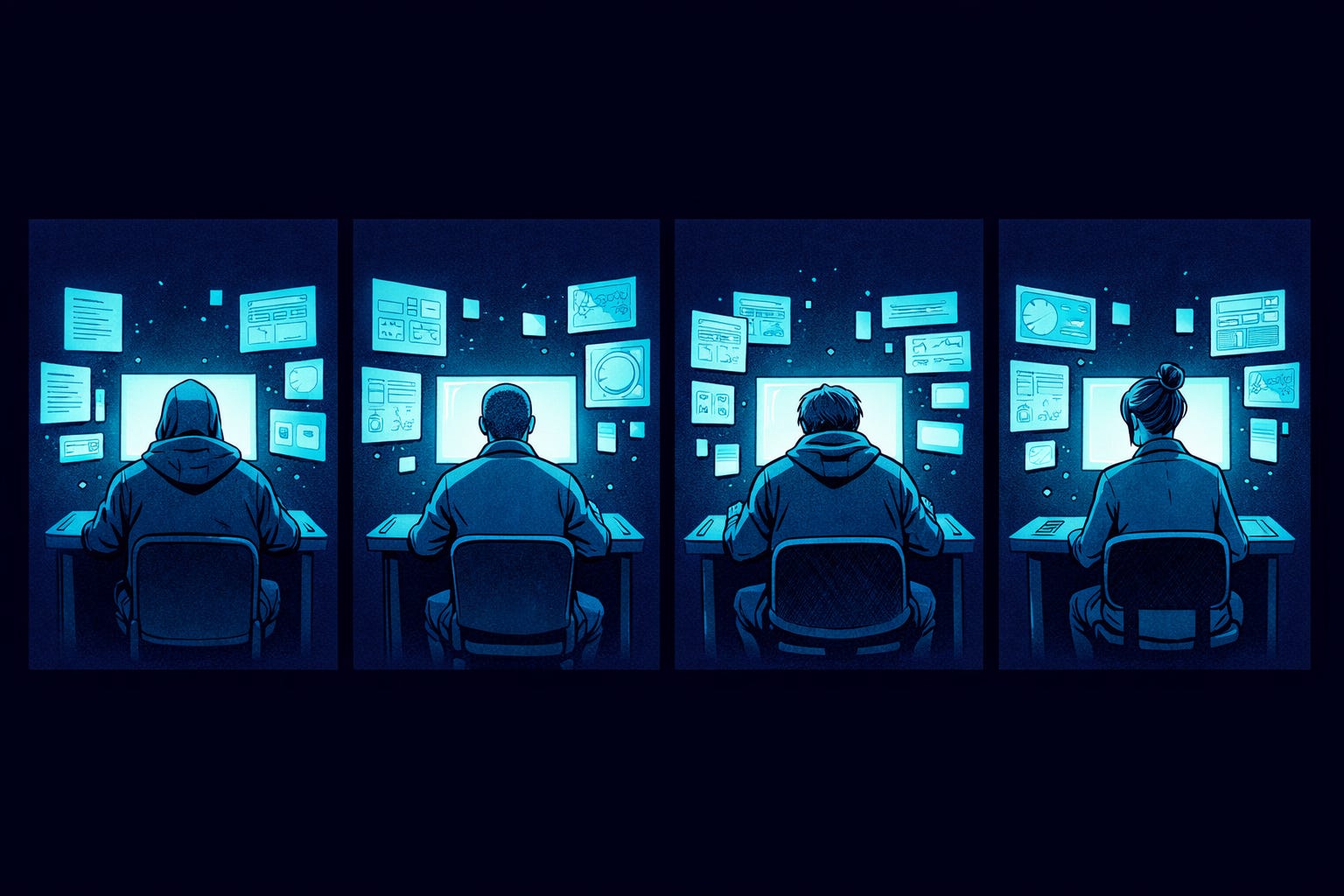
I have seen the future of work and it looks awfully lonely. This future is slowly materializing as more innovative co-working products get released. Two weeks ago it was Claude Cowork. Last week it was Clawdbot (Moltbot). Next week it will be something else entirely. Whatever it is, it will be like all the others that preceded it: solitary augmentation.
Are we sure we want this?
The Lonely Revolution
Take Clawdbot - which had to rebrand to Moltbot today after Anthropic’s lawyers intervened. It’s a rapidly trending open-source AI agent that chats with you on Telegram while it reads and writes its way through every system on your computer.
On its face, the program is a security joke. Anyone who downloads it is giving an agent full shell access to their entire machine. The risks are immeasurable. And yet some of the most seasoned security engineers are stretching their necks to see what it can do.
So, what can it do?
In many ways, Moltbot is the agent we were long promised. It is not just a dutiful notetaker, it is also an autonomous actor. In other words, it can make decisions on your behalf, unprompted, and execute them while you sleep. It can code new tools into existence to serve you in ways you couldn’t have previously imagined.
At ON_Discourse, where we host private conversations on cutting-edge tech, we just hosted a private session on Moltbot. Believe it or not, we have many members that are already neck-deep in a technology that is hardly a week into its popularity. In that session we got a taste of its amazing power. One of our members told us a story.
Moltbot coded for itself a new set of tools to provide an an unsolicited service for its user. This user was working on a keynote. At the time, Moltbot was executing basic web-search research to underscore the primary points. Then Moltbot took it further; rather than articles, what about published books? This is when it got interesting.
Moltbot taught itself - unprompted - to identify relevant books (based on the keynote topic), find a digital version of them somewhere online, scrape them page by page, analyze their content, and distill them into usable material. Finally, the key points and references were accurately inserted into the deck.
The agent invented the tools it needed to do this. The user found out after. This is undeniably amazing. But it reveals a problem. This process - as amazing as it was - was solitary.
Wait, that’s not right….
The process was (somehow) less than solitary. Think about it: a solitary experience happens between an individual and their own mind. The thoughts that bounce around eventually make their way out into world. This experience was different. It was between Moltbot and its context window. When it was done, the user was eventually informed.
Does this matter? On one hand, the user successfully presented a good keynote. Everyone involved was happy with it. On the other hand, there were no other people involved in the process. There were no random connections, no external friction, no pushback. No challenges. This type of work carries a secret cost.
Here is how they put it.
I have very little recall of my work. I could probably not restate what I presented, because the agent did most of the work
It is unbelievable technology, but something is missing. I think I know what it is.
Where are the people?
Tools like Moltbot and Claude Cowork are pushing us to grind and thrive in silos. As many people have said, they can recreate the work of 30 employees in one solitary session. This power is tantalizing and dangerous. That much solitude comes with risks.
Someone in our session said it best:
“No one has figured out how to collaboratively work in this environment. Everyone is just locked into solo agent sessions for 12 hours a day. And I don’t think that is healthy.”
The AI agents of work can do amazing things. They can execute, research, draft, build, summarize. They can read our emails, write responses, and build tools that make anything possible. But they have limitations as well.
They can’t bring another person into the session. They can’t instigate constructive friction. They don’t understand what it is like when someone stops a flowing conversation to ask “are we even asking the right question?”
I know why: these moments are frustrating, inefficient, and unpredictable. They are also incredibly useful to exceptional work. They are the secret ingredient to success.
Maybe the future of work isn’t doing 30 people’s jobs by yourself. Maybe it’s figuring out how to think with other people again.
Something like (domain).